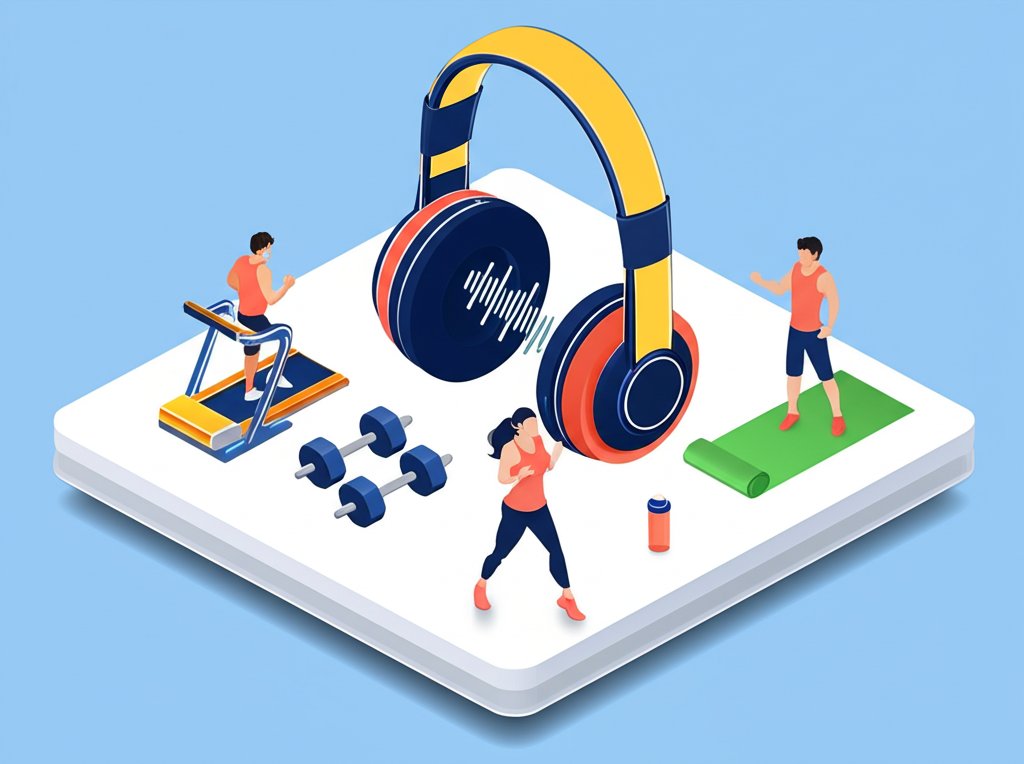
The right beat can be the difference between pushing through that final rep and calling it quits. When you hit play on an exercise music mix that perfectly aligns with your intensity, you’re not just listening to songs—you’re unlocking an extra gear, a psychological edge that turns potential into performance. This isn't just background noise; it's a strategic tool, an often-overlooked secret weapon in your fitness arsenal.
At a Glance: Crafting Your Power Playlist
- Match Music to Movement: Different workout types thrive on specific genres and BPMs.
- Curated vs. Custom: Leverage expert-made playlists or build your own for ultimate personalization.
- Tech Integration: Seamlessly connect your mix across devices for uninterrupted flow.
- Flow and Recovery: Structure your playlist from warm-up through cool-down for holistic support.
- Dynamic Updates: Keep your mix fresh to maintain motivation and prevent plateaus.
Why Your Workout Deserves a Strategic Soundscape
Music acts as a potent ergogenic aid, meaning it can enhance physical performance. It distracts you from fatigue, elevates your mood, and can even synchronize your movements, making repetitive actions feel more fluid. Think about it: a driving beat can push your pace on the treadmill, while a heavy bassline can make that deadlift feel less daunting. This isn't just anecdotal; studies consistently show music reduces perceived effort and increases endurance, transforming your mindset from "I have to" to "I can."
The rhythm, tempo, and lyrical intensity all contribute to this effect. When your internal rhythm connects with the external beat, your body finds a natural groove, conserving energy and amplifying output. This synergy is key to sustaining high-intensity efforts and digging deep when motivation wanes.
Matching Your Music to Your Movement: The Genre-BPM Connection

The effectiveness of your exercise music mix hinges on how well it complements your activity. Different workout styles demand different sonic landscapes. Here’s how to strategically align your audio to optimize your output:
For Steady State Cardio & Aerobics: The Pop-Powered Pace Setter
Activities like jogging, cycling, or elliptical training benefit greatly from music with a consistent, upbeat tempo. Pop-heavy playlists, typically ranging from 120-140 BPM (beats per minute), are ideal for maintaining a steady aerobic rhythm. They're accessible, familiar, and their catchy melodies can keep your mind engaged without being overly distracting.
- Example: For a 45-minute jog, a playlist like Topsify Global's "Running Music: Pop Hits 2025" provides a continuous flow of energizing tracks, helping you maintain a consistent stride and ward off boredom. Think driving choruses and bright synth lines.
For High-Intensity Interval Training (HIIT) & Group Fitness: Motivational Anthems & Dynamic Blends
HIIT sessions and group fitness classes demand music that can transition from high-energy bursts to active recovery. These mixes often blend dance, pop, hip-hop, and R&B, focusing on motivational anthems that build and release energy. The goal is to provide peaks of intensity that mirror your work intervals and slightly lower energy for your rest periods.
- Example: Topsify Global's “Gym Workout Music 2025” features 112 tracks designed for this purpose. Its dynamic range supports explosive movements and powerful group choreography, ensuring the energy never drops when you need it most. Filtr's "Workout Playlist 2025" similarly offers a broad mix for intense cardio like treadmill sprints.
For Strength Training & Weightlifting: Rap, Rock, and Empowering Beats
When you're pushing heavy weights, you need music that matches the intensity and grit of your effort. Rap and rock are dominant forces here, delivering lyrical power and a driving, often aggressive, rhythmic foundation that fuels anaerobic bursts. The psychological edge offered by these genres is undeniable, helping you tap into primal strength.
- Rap-Dominated Mixes: Provide lyrical intensity, strong basslines, and a sense of raw power, perfect for exercises like deadlifts, squats, or bench presses where you need to summon maximum force. The focus is often on the narrative of overcoming, mirroring your own struggle under the bar.
- Rock-Infused Collections: Deliver powerful guitar riffs, thundering drums, and anthemic vocals that can ignite your inner beast. These are suited for heavy lifting, inspiring a defiant push against resistance.
- Empowering Tracks: Regardless of genre, tracks with a strong motivational message or a feeling of overcoming adversity can be incredibly effective. Power Music Workout’s “2025 Fitness Motivation” specifically targets weight training with these types of empowering tracks.
- Example: For a heavy leg day, a playlist incorporating trap and phonk from fitleague's "GYM MOTIVATION & WORKOUT MUSIC" on YouTube Music or Spotify can provide the aggressive soundscape needed for a grueling session. Alternatively, Indiemono’s "CrossFit Songs 2025" offers a vast collection for functional fitness that integrates many of these powerful genres.
For Functional Fitness (CrossFit): Versatile & Relentless Rhythms
CrossFit and other functional fitness routines require music that can keep pace with varied, high-intensity movements across different modalities. A diverse mix of rap, rock, and high-energy electronic music keeps the adrenaline pumping through complex workouts involving lifting, gymnastics, and cardio.
- Example: Indiemono's “CrossFit Songs 2025” with its 293 songs and 14 hours of content, offers a broad spectrum of tracks to power through the most demanding WODs (Workout of the Day), providing fresh inspiration for every session.
For Cool-down & Recovery: Soothing Sounds to Unwind
The workout isn't over until you've properly cooled down and begun the recovery process. This phase requires a dramatic shift in your exercise music mix. Opt for softer tracks, ambient sounds, or acoustic melodies that help lower your heart rate, calm your nervous system, and facilitate mental relaxation.
- Example: Apple Music Fitness's “Pure Recovery” playlist is specifically curated for this purpose, featuring tracks designed to help you unwind and prepare your body for repair.
Curated vs. Custom: Choosing Your Mix Source
When it comes to building your ideal exercise music mix, you have two primary paths: leveraging expertly curated playlists or crafting your own bespoke collection. Both offer distinct advantages.
Curated Playlists: Your Ready-to-Go Motivation
Curated playlists are the easiest entry point into a great exercise music mix. They’re assembled by fitness curators, DJs, or record labels who understand the nuances of workout pacing and motivational psychology. These playlists save you time and often introduce you to new tracks and artists you might not discover otherwise.
- Pros:
- Convenience: Instantly accessible, no time spent building.
- Expert Selection: Tracks are often chosen for specific BPMs, energy levels, and genre cohesion.
- Regular Updates: Many platforms update their fitness playlists monthly or seasonally, ensuring fresh content.
- Variety: Exposure to a wide range of artists and sub-genres.
- Examples from the Ground:
- Apple Music's Offerings: Beyond "Pure Recovery," their fitness curators consistently update playlists for various intensities, often included at no extra cost for subscribers.
- Filtr's "Workout Playlist 2025": A colossal 17-hour mix spanning dance, pop, hip-hop, and R&B, perfect for long, intense cardio sessions.
- Topsify Global's "Gym Workout Music 2025" and "Running Music: Pop Hits 2025": Targeted collections for group fitness/HIIT and steady-state running, respectively, featuring motivational anthems and upbeat pop.
- Power Music Workout's "2025 Fitness Motivation": Tailored specifically for weight training with empowering tracks.
- fitleague's "GYM MOTIVATION & WORKOUT MUSIC": Available on YouTube Music and Spotify, featuring trap and phonk, ideal for bodybuilding and updated with new releases.
DJ Mixes: Seamless Flow for Timed Sessions
A specialized form of curated content, DJ mixes offer a continuous, beat-matched flow that can be incredibly effective for timed workouts or dance cardio classes. The transitions are seamless, keeping your energy high without any awkward pauses between tracks.
- Pros:
- Uninterrupted Rhythm: No breaks or jarring changes in pace.
- Beat-Synced: Often designed with specific movements in mind, enhancing coordination.
- Immersive Experience: Creates a club-like atmosphere, reducing environmental distractions.
- Example: “Joel Corry’s Workout 2025 (DJ Mix)” provides a 45-minute continuous experience, expertly mixing tracks to sync beats to movements, whether for strength or dance cardio classes.
Custom Playlists: The Ultimate Personalization
For those who know exactly what moves them, building a custom exercise music mix is the pinnacle of personalization. This approach allows you to hand-pick every track, ensuring your playlist is a perfect reflection of your taste and workout needs.
- Pros:
- Absolute Control: Every song is one you love and that motivates you.
- Precision Pacing: You can organize tracks by specific BPMs for different workout phases (e.g., warm-up, peak, cool-down).
- Adaptability: Easily modify and update based on your evolving preferences and workout routines.
- How to Build One:
- Start with Your Core: Identify a few genres or artists that consistently get you moving.
- Search by Mood/Energy: Most streaming services allow you to search for tracks by genre, mood, or even explicit BPM ranges.
- Add and Organize: Add your chosen tracks, then arrange them in an order that aligns with your workout's intensity curve. Consider tagging songs by BPM for easier management.
- Test and Refine: Listen through your playlist during a workout. Do the transitions work? Does the energy hold? Make adjustments as needed.
Remember, whether you choose curated or custom, the goal is to create an exercise music mix that eliminates friction and amplifies your drive. For broader inspiration on maintaining that inner fire throughout your fitness journey, remember to also Fuel your bodybuilding journey with powerful thoughts and quotes.
Integrating Your Music into Your Tech Ecosystem
Your exercise music mix is only as good as its delivery. Seamless integration with your fitness technology ensures that your motivational soundtrack is always at your fingertips, regardless of your workout environment.
Leveraging Streaming Platforms and Devices
Most major streaming platforms like Apple Music, Spotify, and YouTube Music offer robust features for fitness. You can access curated playlists, create your own, and often download them for offline listening – crucial for gym zones with spotty Wi-Fi or outdoor runs.
- Apple Ecosystem: If you're an Apple user, the integration is particularly smooth. Playlists created or found on Apple Music can be directly integrated with Apple Fitness+ for guided workouts. They also sync effortlessly with your Apple Watch, allowing you to control playback and even store music directly on the watch for phone-free workouts.
- Cross-Platform Sync: Most services allow you to export playlists to third-party apps, offering flexibility if you use a non-native workout tracker or a specialized coaching app.
- Dedicated Fitness Labels: Labels like fitleague (on YouTube Music and Spotify) specialize in bodybuilding and training music, providing updated playlists whenever new tracks are released, ensuring fresh content for their niche audience.
The Power of Offline Access
Always consider downloading your exercise music mix before a session. This prevents buffering, unexpected ads (if not a premium subscriber), and reliance on unstable gym Wi-Fi or cellular data, which can kill your motivation faster than a missed rep. A continuous, uninterrupted flow is paramount for maintaining focus.
A Practical Playbook for Your Ultimate Exercise Music Mix
Ready to revolutionize your workouts? Here's a step-by-step guide to crafting an exercise music mix that fuels your fire:
Step 1: Define Your Workout Goal and Intensity
Before you pick a single song, clarify what your workout entails. Are you aiming for:
- Endurance (Long Cardio): Steady pace, sustained effort (e.g., long run, steady-state bike).
- Strength (Weightlifting): Heavy lifts, intense bursts, longer rests between sets.
- HIIT/Metabolic Conditioning: Alternating high-intensity efforts with brief recovery.
- Functional Fitness: Varied movements, high energy, technical focus.
- Cool-down/Recovery: Winding down, stretching, mental calm.
Your goal will dictate the energy profile of your playlist.
Step 2: Choose Your Core Genres and BPM Range
Based on your defined goal, select genres and target BPMs that will best support your efforts.
| Workout Type | Preferred Genres | Target BPM Range (Approx.) | Key Characteristics |
|---|---|---|---|
| Steady Cardio | Pop, Dance, Upbeat R&B | 120-140 BPM | Consistent rhythm, light, engaging melodies |
| HIIT/Group Fit | Dance, Pop, Hip-Hop, R&B, EDM | 130-170 BPM | Dynamic energy shifts, motivational anthems |
| Strength Training | Rap, Rock, Metal, Trap, Phonk | 100-140 BPM | Heavy bass, aggressive lyrics, empowering drops |
| Functional Fit | Diverse (Rap, Rock, EDM, Hardcore) | 120-180 BPM | Sustained high energy, powerful driving beats |
| Cool-down | Ambient, Acoustic, Chill Electronica, Jazz | 60-90 BPM | Soothing, calming, instrumental focus |
Step 3: Curated Start or Custom Build?
- If you're time-constrained or prefer discovery: Start with curated playlists from platforms like Apple Music, Spotify, or YouTube Music. Search for "Workout Playlist 2025," "Gym Motivation," or "Running Music" from trusted curators like Filtr, Topsify Global, Power Music Workout, or fitleague. These are often great starting points.
- Case Snippet: Sarah's Speedy HIIT: Sarah wants a quick, intense 30-minute HIIT. She opts for Filtr's "Workout Playlist 2025" and filters it down to a 45-minute DJ mix like Joel Corry's, ensuring continuous high energy for her burpees and sprints.
- If you crave precision and personalization: Begin building your custom playlist. Use your chosen genres and BPM range as filters. Add songs you already love and discover new ones that fit the criteria.
Step 4: Consider the Flow: Warm-up to Cool-down
A truly effective exercise music mix isn't just a collection of songs; it tells a story. Structure your playlist with a natural energy curve:
- Warm-up (5-10 minutes): Slightly lower BPM, uplifting but not overly aggressive. Gets the blood flowing.
- Peak Performance (Main Workout): The core of your playlist, matching your target BPM and intensity. This is where your chosen rap, rock, or dance anthems should live.
- Cool-down (5-10 minutes): Gradual decrease in energy, shifting to softer, calming tracks to aid recovery. Use playlists like Apple Music Fitness’s “Pure Recovery.”
- Case Snippet: Mark's Heavy Lift Day: Mark builds a custom playlist. He starts with a couple of classic rock warm-up tracks (110 BPM), then shifts into intense trap and phonk from fitleague (130-140 BPM) for his heavy sets. He finishes with some ambient electronic for his stretching.
Step 5: Test, Refine, and Update
Your exercise music mix is a living entity. What motivates you today might not hit the same way next month.
- Test in Action: Don't just listen at your desk. Actually work out with your new playlist. Pay attention to how the music impacts your performance and mood.
- Refine Regularly: Remove tracks that fall flat. Add new discoveries. Reorder songs for better flow.
- Monthly/Seasonally Updates: Curated playlists are updated this frequently for a reason. Aim to refresh at least 10-20% of your custom playlist content monthly or seasonally to keep things fresh and prevent musical fatigue.
Quick Answers: Common Questions About Exercise Music Mixes
What's the ideal BPM for running?
For steady aerobic activities like jogging or long-distance running, a BPM range of 120-140 is generally ideal. This tempo helps you maintain a consistent pace and rhythm without feeling rushed or sluggish.
Can music really improve my workout performance?
Absolutely. Research shows music can reduce your perception of effort, increase endurance, distract from discomfort, and elevate your mood. This "psychological edge" allows you to push harder and longer than you might without it.
How often should I update my workout playlist?
To maintain peak motivation and prevent musical fatigue, aim to refresh your exercise music mix monthly or seasonally. Many curated playlists are updated on this schedule, providing a good benchmark for custom lists too.
Are DJ mixes better than standard playlists for workouts?
It depends on your preference. DJ mixes offer a continuous, beat-synced flow without interruptions, which is great for timed sessions or dance cardio. Standard playlists, on the other hand, allow for shuffling and individual track control, offering more flexibility if you prefer variety or skipping songs.
Where can I find good workout music?
Major streaming platforms like Apple Music, Spotify, and YouTube Music are excellent resources. Look for curated playlists from their fitness sections, or search for specific labels like fitleague, Filtr, Topsify Global, Power Music Workout, and Indiemono, which specialize in fitness-oriented music.
Unleash Your Inner Rhythm
The perfect exercise music mix is more than just background noise; it's a powerful ally in your fitness journey. By thoughtfully curating or selecting playlists that align with your workout type, intensity, and personal preferences, you can transform your training sessions from a chore into an energized pursuit. Experiment with genres, pay attention to BPM, and don't be afraid to continually refine your soundscape. Hit play, tune in, and let the rhythm propel you toward your goals.